Hockey Hall of Fame Class of 2026 induction speech highlights
Bergeron, Curley, Price, Rinne, Tkachuk, Burke enshrined

By NHL.com
TORONTO -- The six members of the 2026 Hockey Hall of Fame Class were inducted Monday.
Patrice Bergeron, Cindy Curley, Carey Price, Pekka Rinne and Keith Tkachuk were the inductees in the Player category, and Brian Burke was the inductee in the Builder category.
Here are highlights of each of their speeches:
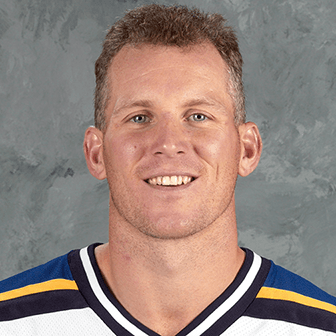
KEITH TKACHUK: 'The gift of hockey'
"Wow, this might be the first time a Tkachuk has ever received a warm welcome in Toronto," Keith Tkachuk said in his opening remark.
It was a joke that he went back to at the end of a 10-minute speech in which he mentioned and honored many former teammates, coaches and executives who acquired him and traded him and acquired him again.
From his days at Boston University, Tkachuk specifically mentioned now-fellow Hall of Famer Jack Parker, who was in the crowd, along with BU teammates Tony Amonte, Scott Lachance and Shawn McEachern.
"Growing up in Boston, I loved the Bruins and hockey became my life," he said.
He brought up his cousin, former NHLer Tom Fitzgerald, who he said "showed me and many others what it took to be a longtime NHL leader and champion."
Tkachuk said he never imagined what being selected by the Winnipeg Jets in the first round (No. 19) of the 1990 NHL Draft would mean to him.
"Winnipeg is where I met my wife Chantel, my incredible second family, my in-laws Don and Pat, and my brother-in-law Craig Oster," Tkachuk said. "Winnipeg is also where I would first understand and respect the privilege of playing in the NHL."
He especially thanked Joe Yannetti, the Jets' Boston-based scout, for never wavering on him despite the fact that he broke his ankle in his draft year and missed a lot of time.
"He found a way for the Jets to draft me in the first round and he changed my life forever," Tkachuk said.
He specifically mentioned two of his Winnipeg teammates, Troy Murray, his first roommate and captain, and Eddie Olczyk, who nicknamed him Walt.
Tkachuk said he was lucky to play with Craig Janney with Winnipeg and the Phoenix Coyotes.
"One of the most unselfish players I've ever known," he said. "He helped me score 50 goals twice."
From Phoenix, Tkachuk went to St. Louis, and in his speech he said that's "where our lives changed forever."
The Tkachuks made St. Louis their permanent home, where Keith and Chantel raised their family, including Florida Panthers forwards Matthew and Brady, and their daughter, Taryn.
Tkachuk spent some time in his speech talking about former St. Louis Blues executive Larry Pleau, who traded for him in St. Louis, traded him to the Atlanta Thrashers and then acquired him back.
"He's probably trying to move me as we speak," Tkachuk joked.
Tkachuk talked glowingly about his time with USA Hockey and said winning gold at the 1996 World Cup of Hockey "with teammates Doug Weight, Bill Guerin and Chris Chelios was one of the most enjoyable experiences of my life. They are teammates and remain my best friends 30 years later. That's the gift of hockey. Our culture is the best in sports."
Tkachuk saved his family for the second half of his speech, mentioning Mary Kay and Beth, "the most loyal and protective sisters anyone can ask for," and his brother Kevin, whom he called his "best friend."
He honored his parents, dad John and mom Gerry, by saying, "This night is truly yours."
"If there was a hall of fame for parents mine would be enshrined on the first ballot," he said. "They sacrificed, served, led and inspired. I'm here tonight because of them.
"I purposely cannot look at my mother. She's crying right now and she'll make me cry."
Tkachuk honored his children, and as he did so it was clear that Matthew had tears in his eyes. He said Chantel is "the biggest win in my life. You raised two sons, a daughter and a husband."
Then Tkachuk got back to his opening joke.
"I began tonight by joking about a Tkachuk finally getting a warm reception in Toronto, but the truth is throughout my life this game has welcomed me at every level," Tkachuk said. "I accept this honor with gratitude to everyone who has been a part of my journey."
-- Dan Rosen, senior writer
CINDY CURLEY: ‘Overwhelmed with gratitude’
After thanking the Hall of Fame and the selection committee, Curley congratulated her fellow inductees, especially Bergeron.
“As a lifelong Bruins fan, I’m so proud to be here with you,” she said. “I never expected to receive this honor, and I’m overwhelmed with gratitude.”
Curley said she began playing hockey on Lake Boon in Stow, Massachusetts, at the age of 5 when her father, Geno, put a stick in her hand. He taught her to love the game as much as he did.
“He may not have known it, but he gave me a great gift back then,” she said. “He treated me exactly like he did my brothers, taught me the exact same lessons, had the exact same expectations. To him, and so to me and to everyone around us, it was all just hockey.”
Curley said she was grateful to her mother, uncle, siblings and close friends.
“I’m often called a pioneer, but I’d like to think I just grew up with women’s hockey,” she said. “And somehow, every time I thought I reached the end of my competitive playing days, a new opportunity opened up thanks to incredible programs and people who made it their mission to support the women’s game.”
One of those people: Lou Lamoriello, who was once the men’s hockey coach and athletic director at Providence College. Curley called Lamoriello “a terrific supporter of women’s hockey.”
“I couldn’t believe I could actually get a scholarship to play hockey in college,” she said. “Those years helped me to grow as a player and as a person. I’m so proud we won the first of Providence’s many national championships during my time and to be named player of the year my senior year, which meant a lot to my dad.”
Curley represented the United States at the first IIHF Women’s World Championship in 1990.
“One of the greatest privileges of my life was to play on the international stage with USA Hockey and represent my country for Team USA,” she said. “It gives me so much pride to have played in several world championships, the Olympic festival, before my competitive playing days were truly over. Since then, it’s been incredible to witness the growth of the women’s game.”
Curley mentioned Olympic women’s hockey and the Professional Women’s Hockey League.
“I’ll end where I began, with the man who first put a hockey stick in my hand, my dad,” she said. “He played the game until he was over 80 years old. I hope to do the same with a great group of Stick Chick hockey friends, many of whom are here tonight, and playing pond hockey on Lake Boon.
“Hockey’s a very special game that gave so much more to me than I could ever give back. Thank you again to so many for so much.”
-- Nicholas J. Cotsonika, columnist
BRIAN BURKE: ‘Life is funny’
A former college and American Hockey League player, Burke expressed appreciation for making it to the Hall of Fame despite not playing a game in the NHL.
The longtime NHL executive was general manager of the Hartford Whalers, Vancouver Canucks, Anaheim Ducks and Toronto Maple Leafs, winning the Stanley Cup with Anaheim in 2007. He was also president of hockey operations for Toronto, the Calgary Flames and Pittsburgh Penguins, and worked for the NHL as the director of hockey operations.
“When I first got the call from the selection committee, I paused,” Burke said. “Nobody starts playing hockey at 13 years old in Minnesota and says, ‘Someday I'm going to be in the Hockey Hall of Fame,’ unless you’re an idiot. Your first dream is to play high school hockey, which I did for just one year. Then you dream of playing college hockey, which I did after I stuck as a freshman walk-on at Providence College. Then you dream of getting a scholarship, which I did.
“After getting a half-scholarship my second year, I started to dream of playing pro hockey, which you do after playing seven games in the American Hockey League on a tryout agreement for $200 a game and $7 a day (in) meal money.”
Burke played four years at Providence College and two seasons in the AHL with Springfield and Maine, where he won the Calder Cup in 1978.
“You sign for $10,000 to play for the Maine Mariners for $15,000 a year,” he said. “Then you win a Calder Cup and then you retire, having never played even one game in the NHL. You say to yourself, ‘You’re hockey career is over. The Hockey Hall of Fame, not a goddamn chance.’”
But Burke ended up being enshrined anyway, taking another path.
“Life is funny. How do you keep moving?” he said. “Hard work, belief in yourself, and lots and lots of help.”
Burke thanked longtime NHL executive Lamoriello, former NHL general manager and coach Pat Quinn, and NHL Commissioner Gary Bettman for helping him throughout his storied executive career.
“Lou, thank you for everything. You set the gold standard for what it means to lead an organization with discipline and loyalty,” Burke said of Lamoriello, his coach at Providence. “Playing for you taught me the lessons that I used in every single front office I ever ran. You told me in high school I would never play college hockey. You also told me to quit hockey and go back to law school. Thanks a lot, coach.”
Quinn hired Burke as an assistant general manager in Vancouver.
“Pat was a mountain of a man with a heart and a brain to match,” Burke said. “He taught me how to run a team with integrity, backbone, and yes, a little bit of functional hostility.”
Burke also reflected on his time in the NHL and working with Commissioner Bettman.
“Gary Bettman, thanks for all the kind words, and thank you for giving a chance to a guy who couldn't even tie a tie,” Burke said. “You let me run hockey operations for a while. Gary, your vision built the modern NHL and I'm proud to have been a small part of it.”
Burke then recognized NHL Deputy Commissioner Bill Daly with a play on words: “And to thank you, Bill Daly. Robin to Gary’s Bettman.”
Burke worked as a player agent during his career and thanked some of the players he represented. Midway through his acceptance speech, Burke lamented on not bringing a bottle of water up to the stage with him, to which fellow inductee Carey Price stepped up to hand him his.
“I'm taking help from a goalie. It bothers me,” Burke joked. “Two goalies in this class. What are we doing?”
Burke went on to talk about the dealing he pulled off to draft Henrik and Daniel Sedin and bring the twin brothers to Vancouver, which he considered one of his biggest achievements.
“I told them on Day 1, the rookies were meant to be seen and not heard and they didn’t say a goddamn word to me for four years,” Burke said. “But what players they were.”
In between executive jobs, Burke often worked with media outlets in Canada as an expert analyst.
“Thank you for a great career in broadcasting, even though I got fired every place I worked,” Burke said. “Sportsnet, TSN, and ‘Hockey Night in Canada,’ thank you. I know, a lot of thanks for people who fired me. I don't know why I'm doing it.”
Burke also talked about his work trying to make the game more inclusive.
“As much as I love my Stanley Cup ring, I was taught that the legacy we leave on the ice is only a fraction of our responsibility. We need to focus on the ideals and principles that have made this game great,” he said. “The world has undone some of the gains we've made on behalf of the LGBTQ+ community, and all our other groups that need our help.
“On behalf of my late son Brendan, we need to regain our focus. The other thing we need to do is keep this game available and affordable to all young men and women, boys and girls. The game is too expensive; we have to figure that out. The NHL has been a champion on this journey, but we all need to keep our focus.”
In closing, Burke thanked his family members and talked about the sacrifices they had to make during his time in the NHL.
“I spent a lifetime fighting for my teams, fighting for my players and occasionally fighting with the media,” Burke said. “But standing here tonight and looking down at this room, I don't feel like fighting. I just feel a profound, profound amount of gratitude and humbleness. Thank you to the Hockey Hall of Fame. Thank you to the game of hockey for giving a kid from Minnesota a life beyond his wildest dreams. God bless.”
-- Derek Van Diest, staff writer
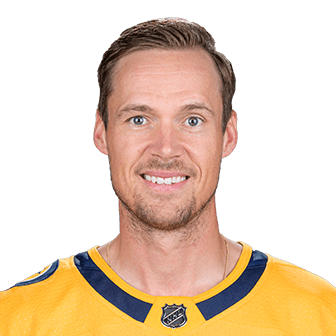
PEKKA RINNE: ‘Never give up’
Rinne's story is different from those of most other Hockey Hall of Famers. He was not a top prospect. He was barely scouted. He was not even a starting goalie on his team in the year he was selected in the eighth round with the 258th pick in the 2004 NHL Draft.
But after summarizing how he got from Kempele, "a small town in northern Finland," to the Hall of Fame, the former Nashville Predators goalie used the last portion of his eight-minute speech to pass along a piece of advice.
"If there's something I want to pass along to any young athlete who is watching tonight it's this," Rinne said. "You don't have to be the most highly touted athlete. You don't have to have everything figured out when you're young. Your path doesn't have to look like anyone else's. Mine certainly didn't. There will be setbacks. There will be moments when you doubt yourself. That's part of the journey. What matters is that you love what you do, that you're willing to work for it, that you learn from the people around you, and never give up. So to everyone who was a part of my journey, my family, teammates, coaches, trainers, the Preds organization, the fans in Nashville, my friends in Finland and everyone who believed in me, I share this honor with you. Thank you from the bottom of my heart."
Among those people who helped him get to the Hall of Fame are his older cousins, Jari and Miikka.
Rinne said Jari was a goalie and his idol when he was growing up.
"As soon as I saw Jari's goalie gear I knew I wanted to be a goalie," Rinne said.
Rinne talked about playing the game in a lower-level junior league as a tall and uncoordinated goalie.
"I had big dreams but playing in the NHL seemed a long way away," Rinne said.
He brought up his junior coach, Harri Hautamaki, who pushed him to stick with the game and got him the opportunity with Karpat that led to his professional career.
"Thank you for lighting the fire in me, Harri," Rinne said.
He was a backup with Karpat to former NHL goalie Niklas Backstrom and did not know at the time that the Predators had Finnish scout Janne Kekalainen paying attention to him.
"To my surprise I was drafted by Nashville in 2004 in the eighth round, 258 overall," Rinne said. "In August of 2005 I signed my first contract with the Nashville Predators not knowing it would be the beginning of a 16-year career with the organization.
"Nashville became so much more than just a place where I played hockey; it became my second home."
Rinne thanked former Predators general manager David Poile for believing in him.
"You gave me an opportunity and changed my life forever," Rinne said.
He thanked his three NHL coaches -- Barry Trotz, Peter Laviolette and John Hynes -- and his two goalie coaches: Mitch Korn and Ben Vanderklok. Trotz, Korn and Vanderklok were part of the Predators contingent in the crowd.
He remembered his agent, Jay Grossman, and former assistant coach Brent Peterson, who both died recently.
Then Rinne made it a point to talk about what it means to be the fourth Finnish player inducted into the Hall of Fame, joining Jari Kurri, Teemu Selanne and Riikka Sallinen.
"Finland is a small country but hockey is a huge part of who we are," Rinne said. "Players like Kurri, Selanne, (Teppo) Numminen, (Esa) Tikkanen, (Saku) Koivu, (Kimmo) Timonen, (Jere) Lehtinen, Riikka Sallinen and many more paved the way for the next generation. You gave us someone to look up to, someone we could point at and say, 'Maybe one day that could be me.' Representing Finland and wearing the Team Finland jersey were some of my proudest moments of my career. Now to become just the fourth Finnish born player to be inducted into the Hockey Hall of Fame is something that I find incredibly special."
Rinne, of course, credited his family -- his mom and dad, sisters, wife Erika, and sons Samuel and Paolos -- for who he is as a person, not just a hockey player.
Then he finished his speech with his special message of advice to any kids out there who are just like him; not well known, not the best on their team, not anyone who is dreaming of getting into the Hall of Fame right now.
"I'd be lying if I told you that I saw this coming," Rinne said.
-- Rosen
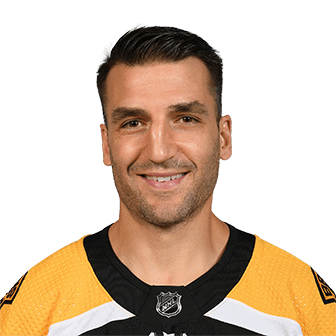
PATRICE BERGERON: ‘More than just a game’
After congratulating his fellow inductees, Bergeron said his mind always takes him to the feeling of putting on skates.
“As I grew, hockey became so much more than just a game,” he said. “At every level, I had the opportunity to play, compete and learn but most of all to do something I truly loved.
“Don’t get me wrong. It wasn’t always easy. During my first year of organized hockey, I would sit in the back of the net, stacking pucks and refusing to get up. The only time I moved was to go see my parents by the boards and complain about how bad my skates were hurting my feet.
“But even then, after getting off the ice, I’d tell them how much I loved it.”
Bergeron said he was lucky to have minor hockey coaches and teammates who helped him develop. He learned how to win, lose and persevere through adversity.
“But most of all, I learned that hockey’s about people,” he said. “The friendships, memories and values of hard work, teamwork and humility will stay with me forever.”
Bergeron traced his journey from junior hockey to the NHL.
“I arrived at the (2003) NHL Draft with no real expectations, and when the Boston Bruins drafted me in the second round, I had no idea it would be the beginning of an incredible journey,” he said. “I ended up making the team a few months later, and some days I had to pinch myself. I was getting dressed between Joe Thornton and Martin Lapointe and got to play against my idols and role models -- Peter Forsberg and Joe Sakic.”
Bergeron said he was especially grateful to his 2003-04 coaches who helped him as an 18-year-old rookie learning English and adapting to a new country. He thanked Kent Hughes, who was his agent and is now the general manager of the Montreal Canadiens. He called representing Canada one of his greatest honors and thanked everyone who made that dream possible.
“I was fortunate to represent Canada on my occasions, and winning Olympic gold for our country in Vancouver and Sochi with Carey is something I’ll cherish for the rest of my life,” he said.
Bergeron thanked the fans and city of Boston for welcoming him and standing behind him throughout his career.
“The Boston Bruins are more than a hockey team; they are part of Boston’s identity,” he said. “It’s built by legends, cherished by generations and deeply connected to the community. Being part of that history is one of the greatest accomplishments of my life.”
Bergeron thanked many people connected with the Bruins, then his teammates, especially those with whom he won the Stanley Cup in 2011. He singled out two teammates -- Zdeno Chara and Brad Marchand -- and recognized many others in the crowd by their nicknames.
He finished by thanking his family and the legends of the Hall of Fame.
“Thank you for inspiring a young boy from Quebec City to believe that anything is possible,” he said. “I hope my journey inspires future generations to dream big, believe in themselves, and never stop chasing those dreams.”
-- Cotsonika
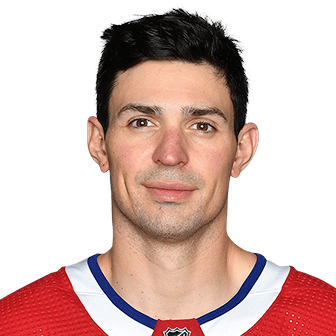
CAREY PRICE: ‘A relentless desire and an opportunity’
Price’s journey to the Hall of Fame began in the remote community of Anahim Lake, British Columbia, with a population of roughly 1,500.
The goalie talked about his road to the NHL and the sacrifice made by his family, allowing him to go on to play 15 seasons with the Canadiens.
“All I can ever really remember wanting to be, was a hockey player,” Price said. “Growing up in a remote community, there was a very slim chance of this happening without a relentless desire and an opportunity. That opportunity was provided with sacrifice, and as a parent of a young family, I now understand what the biggest of many was. It was time.
“The time spent apart between a mother and a son, and time spent apart between a father and a daughter. Mom, Dad, (sister) Kayla, thank you for that opportunity.”
Price talked about traveling from Anahim Lake to Williams Lake to play minor hockey, a journey of over 200 miles.
“I’d like to thank all the coaches, parents and volunteers for making my childhood hockey memories special,” Price said. “From there, the Tri-City Americans (of the Western Hockey League) gave me the opportunity to continue pursing my dream. I spent four fond years there and I’m thankful to everyone within the organization and the community. I still love going fishing there.”
Price was selected by Montreal with the No. 5 pick in the 2005 NHL Draft. He played for Canada at the 2007 World Junior Championship and made his NHL debut in 2007-2008 after a brief stint with Hamilton of the AHL, where he won the Calder Cup in 2007. He also won a gold medal with Canada at the 2014 Sochi Olympics.
“My time in the Hammer (Hamilton) was brief but it sure was memorable,” Price said. “Handing the reins over to a 19-year-old kid was quite the gamble, but what a way to start your pro career. That was a special group and thank you to everyone that was involved.”
Price recalled a dream that he had as a child, walking down a red carpet and meeting fellow Canadiens legend Patrick Roy, the very image of what he wanted to be.
“I’d like to thank the Montreal Canadiens organization for believing in me and giving me the opportunity to live out a literal childhood dream,” Price said. “That organization is just filled with big-hearted people. Thank you to everyone there.
“To the biggest Habs fans, which is every Habs fan I’ve ever met, thank you for the love you’ve shown me, not only on the ice, but in the city. It’s always a joy to come home.”
Price went on to thank his wife, Angela, for sharing the journey with him.
“I’m proud to have represented the Cariboo Chilcotin area and the Ulkatcho First Nations, I’m very proud to be in the Hockey Hall of Fame, but there is nothing in this world I will ever be more proud of than my beautiful children. I love you very much” Price said. “I’m not a perfect person, and lastly, but most importantly, I’d like to thank the good Lord for his forgiveness and all the blessings that he’s bestowed upon my life.”
-- Van Diest