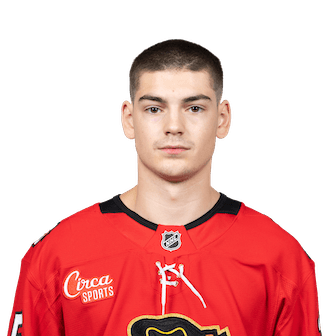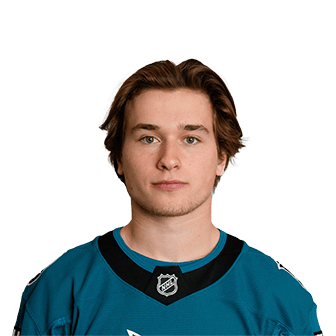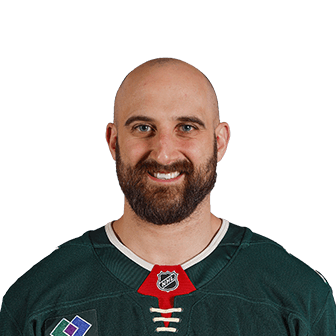
Young NHL players find ways to get used to adulting out on their own
Veterans, Player Orientation Program offer guidance to ease growing pains

By Tracey Myers
NHL.com Staff Writer
CHICAGO – Anton Frondell had made plenty of adjustments in his first few weeks back in the United States.
No longer living with family and residing in a different country, however, is new territory for the Chicago Blackhawks forward.
“A lot of new stuff. Small things. Like the rules in traffic are different. Food is different. The clock, the time on the phone is different, PM and AM,” Frondell said. “I feel like over time I’m getting used to it but I kind of still have my settings, the Swedish schedule so far.”
Frondell got a taste of life in North America at the end of last season, when he played in 12 games for the Blackhawks, this after playing for Djurgardens of the Swedish Hockey League the past two seasons.
But now, he’s experiencing what most North American junior and college hockey players are going through as they jump to the American Hockey League and NHL. They’re no longer living with family, be it blood relations or billets. They’re on their own, responsible for their own bills, money, food and other things.
To use a social-media term, they’re adulting.
The Blackhawks have several young players in the midst of this. Frondell, 19, and fellow forwards Roman Kantserov, 22, Sacha Boisvert, 20, and AJ Spellacy-spellacy-8484858/stats), 20, are adjusting to life on their own this season. Those who had to adapt last season include forwards Oliver Moore, Ryan Greene, Nick Lardis and defenseman Sam Rinzel. They are all 22 or under.
“Obviously, it’s an adjustment and I think that’s sometimes the biggest thing is maybe a kid doesn’t think he’s ready or not. I personally thought I was ready,” Rinzel said. “Sometimes, all kids think about is if they’re ready for the hockey part. They don’t realize if they’re ready for the whole lifestyle and that whole part of it. So that can hit them in the face sometimes.
“It’s nothing crazy. It’s fun. I’m doing what I love but some people kind of forget about it but it is different.”
Frondell is easing into his new lifestyle. Right now, he’s living with forward Connor Bedard, who’s entering his fourth season with the Blackhawks and was named captain on Sept. 15.
It’s similar to what Lardis did last season, his first as a pro. He lived in Rockford, home of the Blackhawks’ American Hockey League affiliate, with a couple of other players. Lardis wasn’t alone, but it was still a big difference from living with family.
“It’s definitely a lot easier and you don’t have as much responsibility, whether it’s paying some of the bills or cleaning the whole house, doing the laundry, dishwasher, all that stuff,” he said. “You definitely have to be more organized, but I think I did a good job in junior (in Brantford of the Ontario Hockey League) for the most part being organized.
“So, when I came here for Rockford or Chicago, I was kind of more prepared with how it was going to go.”
The NHL has been helping players make the transition to pro hockey for more than 10 seasons. In 2012, the League and the NHL Players Association collectively bargained to have the Player Orientation Program (POP). The jointly administered program between the League and NHLPA, which has been in the CBA since 2013, reaches players early in their NHL careers and is designed to enhance players’ life skills, generally and as they relate to life in the NHL.
“We obviously took two years off for COVID and COVID-related reasons, but the program itself has been quite successful,” NHL Deputy Commissioner Bill Daly said. “I think we're doing what we should be doing. It’s really giving the players all kinds of a flavor of the things that they'll be dealing with at our level that they perhaps didn't have to deal with at lower levels of hockey.
“We've gotten very strong, positive reviews not only from the players, but, you know, the results have certainly borne out. So, it's been a good program for us, and I couldn't even envision a situation where we wouldn't have it going forward.”
Over three days each summer, approximately 90 young NHL players are selected by their clubs to attend the POP, where they are educated on various topics including finance, personal branding and sensitivity training.
“They’re making more money than they ever have as far as even entry-level contracts, but the ability for them to earn down the road is unlimited potentially so I think having that program, teaching them some fundamentals about money, about resources, about taxation,” NHLPA executive director Marty Walsh said. “The PA sits with them, talks about what we do as a players’ association. They’re getting some real-life experiences from former players, whether they struggle with alcohol or drugs whatever, they went to prison, they’re letting people know they’re in a whole different life today as an NHL player. So, it is an important program.”
It’s important for all prospects, including those coming from overseas. Kantserov lived with his family in Russia while playing for Magnitogorsk of the Kontinental Hockey League from 2022-26. After spending a few weeks this summer in Stamford, Connecticut, where he practiced with other Russian players, some New York Rangers and Blackhawks goaltender Spencer Knight, he’s living in a hotel in Chicago.
“For me, for the guys from Europe, Russia, it’s absolutely a different life. I came to the states three months ago, got to make some documents, social security and bank accounts,” Kantserov said. “My agent helped me with this stuff in Connecticut. It’s also like new rules of driving, you know, some rules in life and restaurants, in the city on the street. It’s a little bit different but not too much.”
No matter where you’re from, going on your own is an adjustment, one that players across the League have experienced. So, what’s the toughest part? For some, such as Calgary Flames forward Matt Coronato, it was cooking.
“My mom gave me like a nice recipe book to try to cook with,” said Coronato, who was a rookie in 2023-24. “I feel like I'm pretty good with grilled chicken and rice or ground beef, but I think my first year that was a bit of a challenge, like taking the time to cook and do that. But I think as you get adjusted it's nice to have your own spot and do your own thing. It's part of growing up, right?”
Philadelphia Flyers defenseman Jamie Drysdale, a rookie in the Anaheim Ducks organization in 2020-21, had some advice in that department.
“I would recommend just getting a barbecue,” he said with a laugh. “It makes life way easier.”
For Drysdale, who lived with former Ducks/current Boston Bruins defenseman Hampus Lindholm as a rookie, being away from family was the toughest part.
“You go six months or whatever without seeing your home friends and family. That’s an adjustment and that’s something you can definitely keep an eye out for younger guys because it is tough,” he said. “It’s a long year, a lot of ups and downs, the pressure’s elevated. So, I think that’s why you have teammates, that’s why you have good teammates as well.”
Indeed, several players have turned to veterans for lodging and/or advice. San Jose Sharks forward Macklin Celebrini lived with former Sharks captain Joe Thornton during his rookie season. Dallas Stars forward Wyatt Johnston lived with former forward Joe Pavelski his first two NHL seasons.
Flyers forward Trevor Zegras said he lived on his own since his sophomore season at Boston University. But when he first arrived in Anaheim in 2020-21, he looked to the veterans for advice.
“(Ryan) Getzlaf is always a good one,” Zegras said.
Getzlaf played for the Ducks from 2005-22 and was their captain from 2010-22.
“I had (former forward) David Backes at a younger age who was really good, but ‘Getzy’ was a great guy to ask questions,” he said. “He’s just kind of been through it all, so he was a good soundboard for me.”
For Blackhawks forward Frank Nazar, Nick Foligno, who played for Chicago from 2023-26, was a great resource.
“I think he helped every single guy whoever came through any team he’s ever been on for the last 100 years he’s been playing,” Nazar said with a laugh. “He definitely was a huge help, but a lot of the young guys were, too.
“(Blackhawks defenseman) Alex Vlasic went through it. I remember I just came to Chicago to skate a little bit, probably a year before I signed, so I was still at (the University of) Michigan. He took me out to lunch, and I got to know him a little bit. He just made me feel comfortable being there and skating with everyone and stuff like that. I think you have to help each other out. You’re going through the same thing and just stick together as a group.”
Going on your own. We all do it. It can be stressful. It can also be fun and exciting. Eventually the new becomes routine, and life rolls on.
“I’m so much more comfortable now. Even on the ice I think it translates. Everything’s in between the ears and I feel so much more comfortable, even just having that one year under your belt,” Rinzel said.
“You’re still learning some things, but everything slows down a little bit for you which makes everything so much easier, whether it’s off the ice or on the ice. It’s just how it goes. You learn and it’s the more you know.”
NHL.com director of editorial Shawn P. Roarke contributed to this story.